Art for the World Stage: Billich’s Global Legacy”
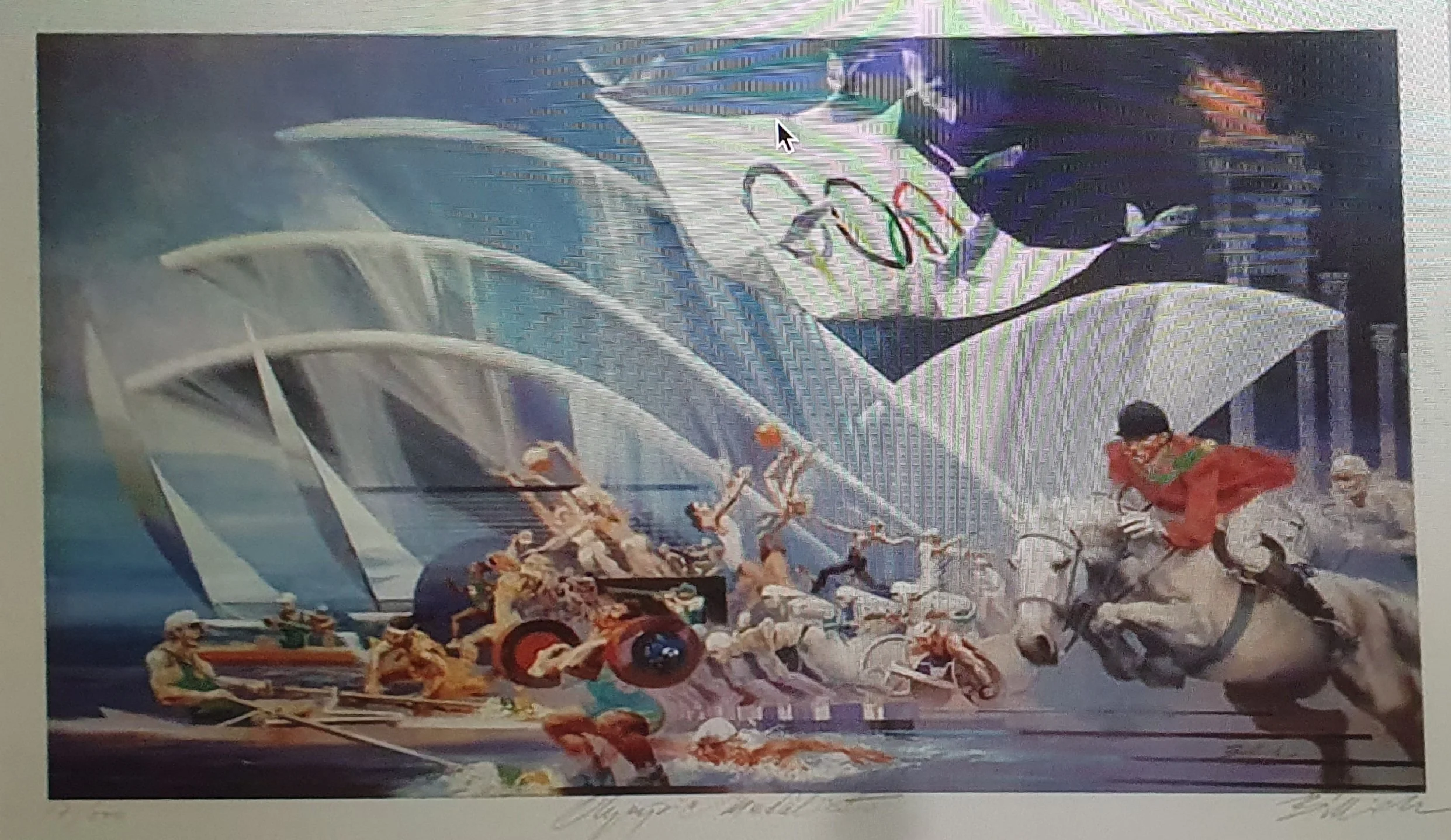
Charles Billich is one of those artists whose work somehow ends up everywhere—sporting arenas, royal halls, cultural festivals, even unexpected corners of cities half a world away. Billich paints the way he talks—bold, fast, full of movement—and that energy seemed to attract big global projects almost naturally. You look at his career and realise he wasn’t just “international”; he was practically on tour for half his life.
One of his biggest turning points was the Sydney 2000 Olympic Games. Anyone who lived in Sydney back then remembers the buzz. The whole city was full of excitement. Billich was chosen as the official artist—he was capturing the mood of a country hosting the world. His athletes looked like they were sprinting out of the canvas, and his cityscapes twisted and leaned like Sydney itself was warming up before the opening ceremony. Those works are sought after among collectors like souvenirs from a once-in-a-lifetime moment.
And then came more. A lot more.
He created work for the U.S. Olympic Committee, the Beijing Olympics, and the FIFA World Cup. Not small gigs—global ones, where millions of eyes end up on the artwork. His FIFA pieces, for example, were wildly popular because they combined the drama of soccer with his signature, slightly surreal architecture. Stadiums seemed to bend around the players, like the buildings themselves were cheering.
But Billich wasn’t locked into sports. That’s just where a lot of people first noticed him.
Take China, for example. He spent years building a relationship with cultural organisations there and ended up being named the 77th Honorary Shaolin Monk.It came from his work capturing aspects of Chinese culture in a way that was respectful and uniquely “Billich.”
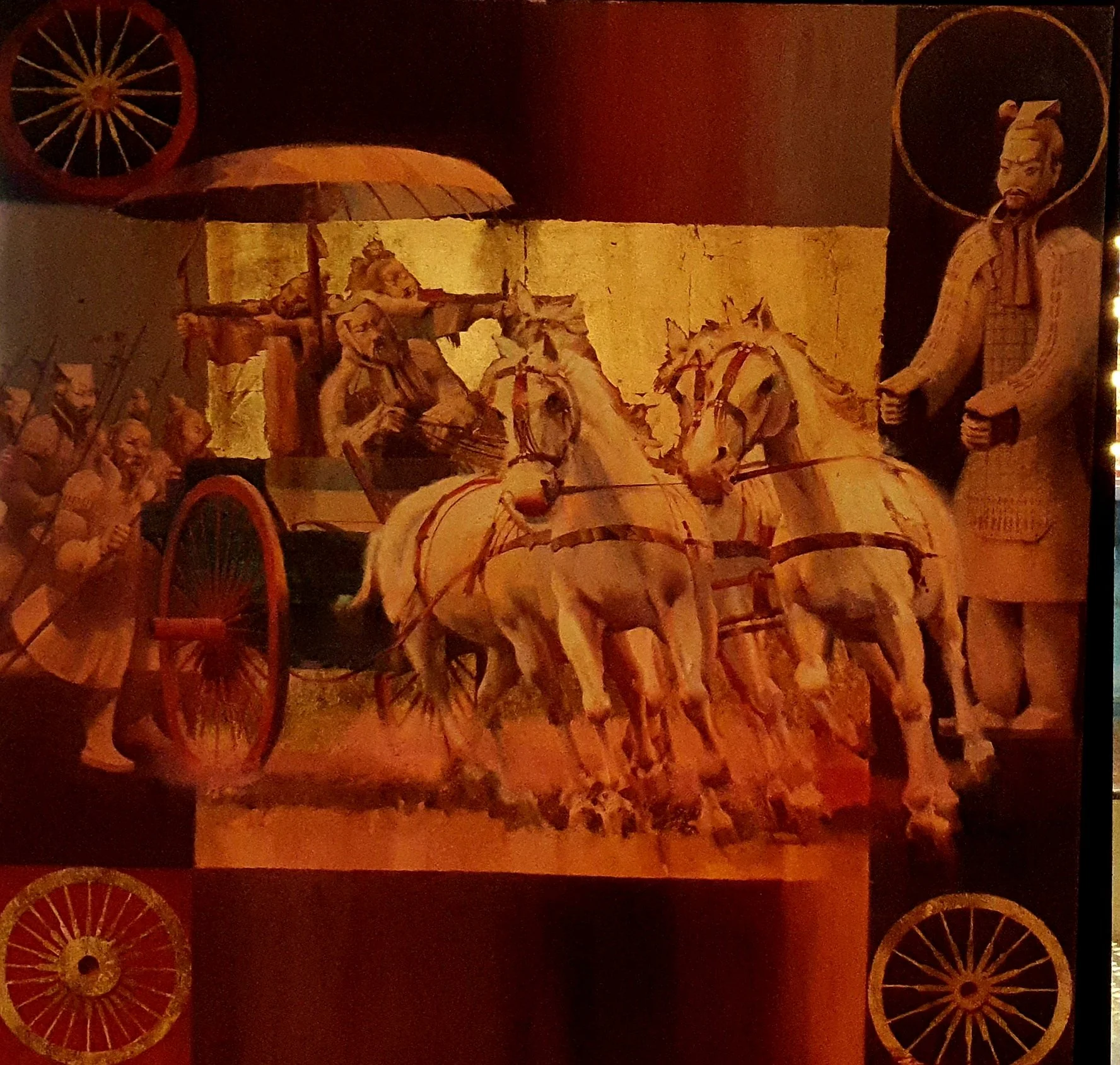
Bing Ma Yong Action- Charles Billich.
Europe had its own chapter of Billich’s world tour. In Florence, he received the Lorenzo Il Magnifico Prize at the Biennale—one of Italy’s major art recognitions. People there loved how his paintings stretched architecture into new shapes, like he was showing a city’s personality rather than just its buildings. His Paris exhibitions drew a crowd curious about the Croatian-born Australian .
He also had a long-running connection with Tonga, where he received the Order of the Crown from King George Tupou V. He had created portraits and works tied to the Tongan royal family and regional culture. It showed how far his influence reached—not just in big cities, but in places with deep cultural traditions.
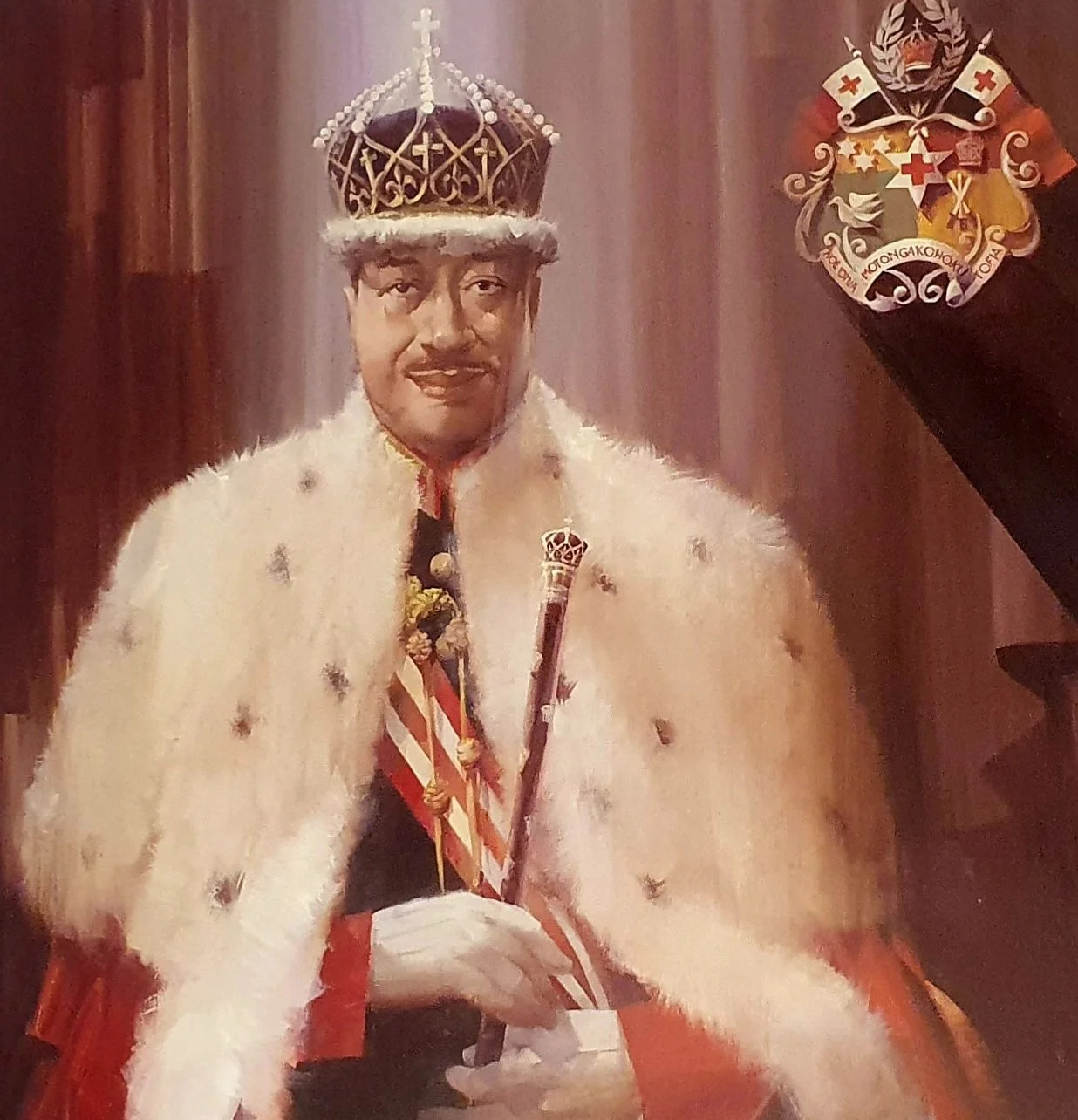
His Majesty King George of Tonga by Charles Billich
Another project that often gets overlooked is his involvement in humanitarian and peace initiatives. Billich produced artworks for the Red Cross, the World Expo, and several UN-related exhibitions. He enjoyed stepping into global causes, not just global events. His paintings exhibited at peace conferences were his way of showing the tension and hope inside international diplomacy.
If you’ve ever walked into his studio, you’d understand how he jumped from one international project to another. The place looked like a travel diary exploded—sketches of Monaco, Zagreb,Split ,Sydney, New York, Beijing, Rome, and random notes. Visitors often said it felt like they were stepping backstage at a show: canvases half-finished, colours everywhere, and Billich in the middle of it explaining the story behind each piece as if it had happened yesterday.
What ties all his global projects together is how personal they felt. Even when he worked on events watched by millions, he always managed to inject his own spin on it —the tilted buildings, elongated figures, and that feeling that everything in the painting is in motion. He didn’t just fade into the event; he brought the event to meet him halfway.
Looking at his legacy now, it’s clear he isn’t just an Australian artist who travelled. He built a global footprint through relationships, and a style that stood out even in huge international settings. His paintings showed up in places where cultures, sports, and politics overlapped—and they just fit.
He is known to carry himself with the effortless confidence of someone for whom being famous simply felt like an everyday, perfectly ordinary part of life.